From Research to Startup Idea: Recap of the Entrepreneurship Workshop 2026 in Karlsruhe
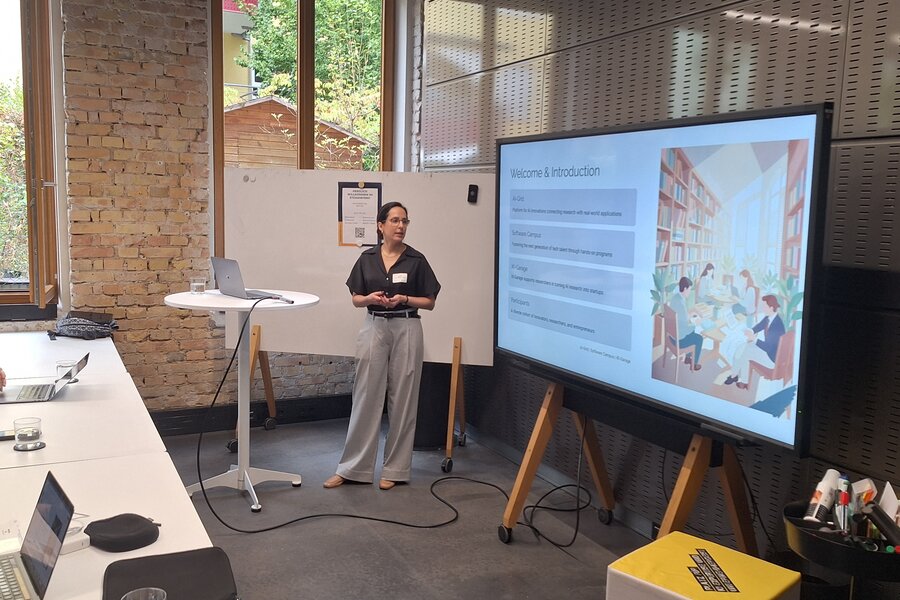
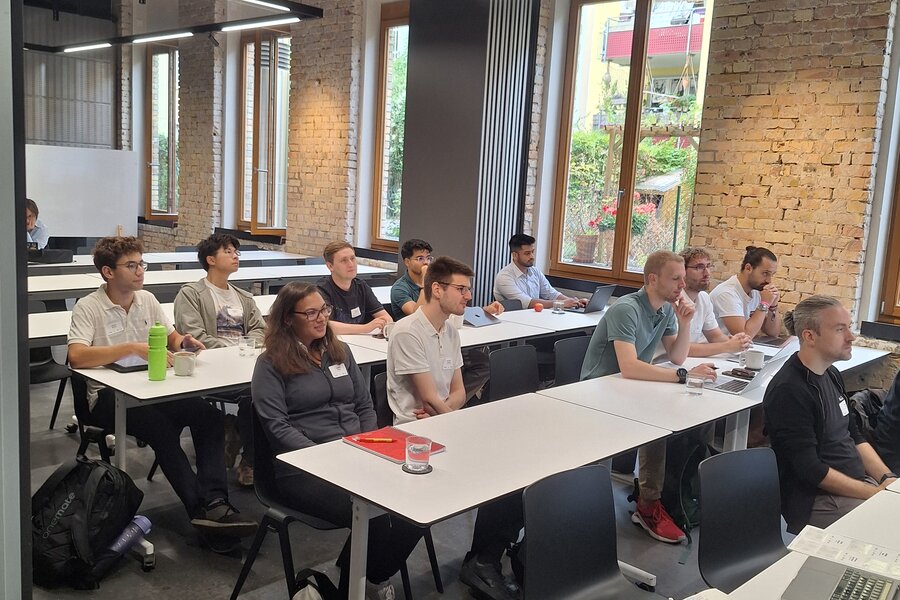
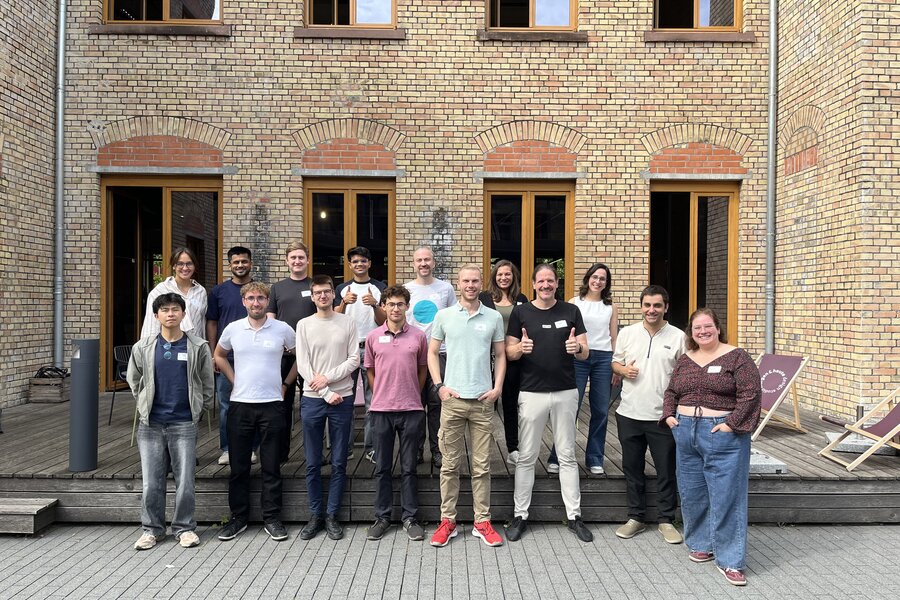
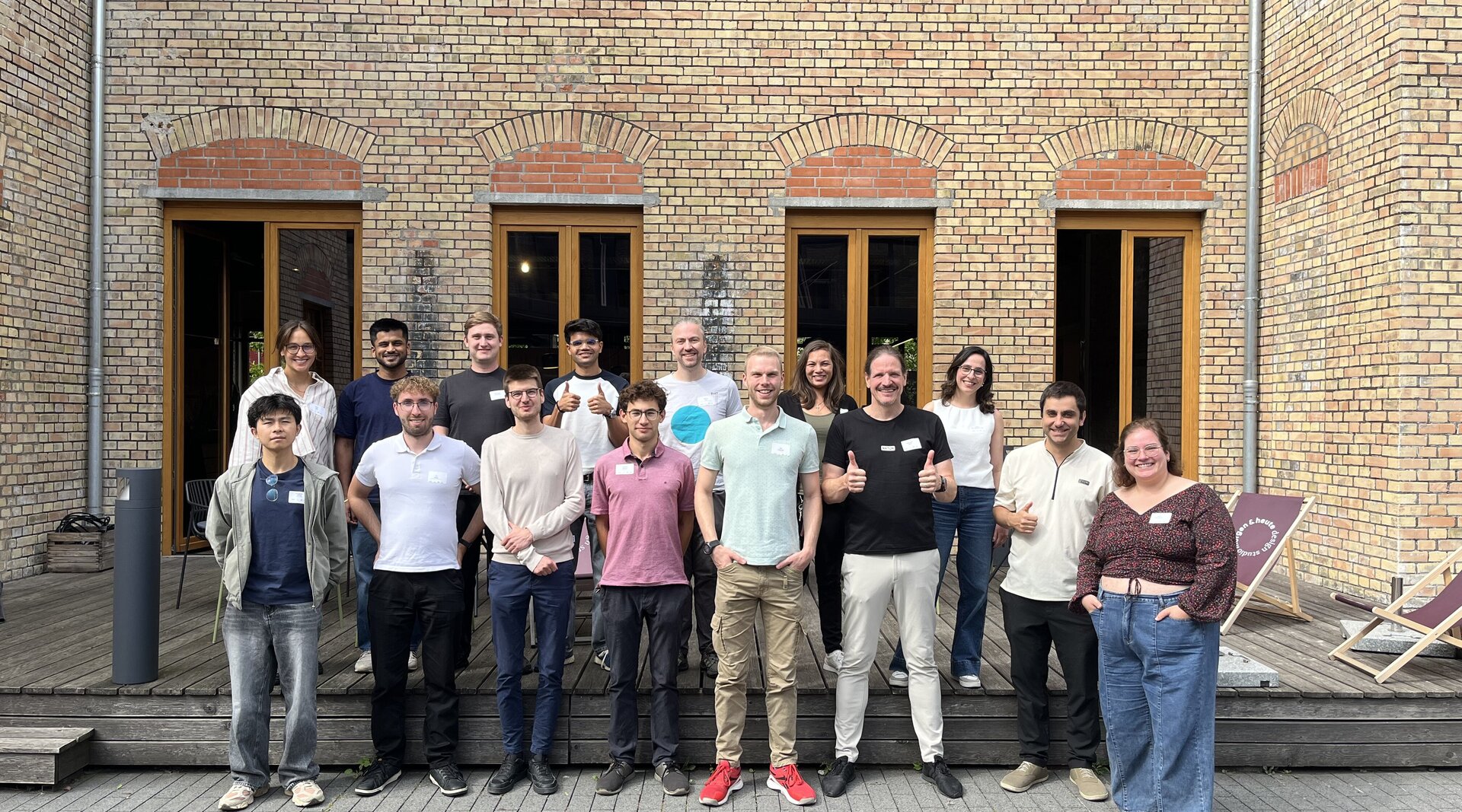
Founding a company is one of many career paths open to AI researchers. On 2 and 3 September 2026, 12 selected early-career researchers explored what that path can look like at the Entrepreneurship Workshop in Karlsruhe. We hosted the workshop together with our partners AI Grid and Software Campus. Our shared goal is to strengthen support for science-based spin-offs from our programs.
Learning to think like an entrepreneur
The KI-Garage team kicked things off by asking what entrepreneurship actually means. Through exercises on the entrepreneurial mindset and a creative problem-solving game, participants stepped outside familiar thinking patterns. They developed solutions for problems far outside their own fields and saw how widely technologies can be applied.
Problem first, solution second
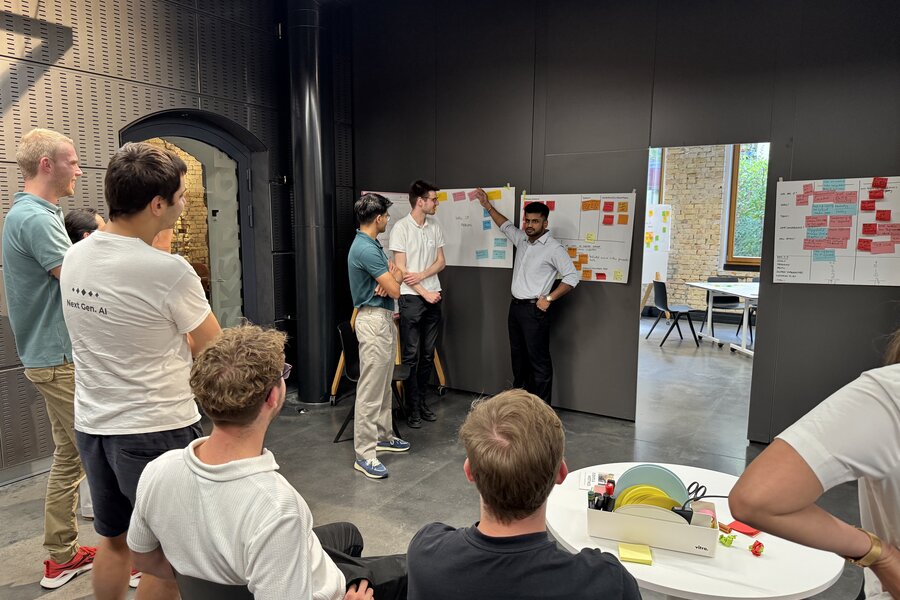
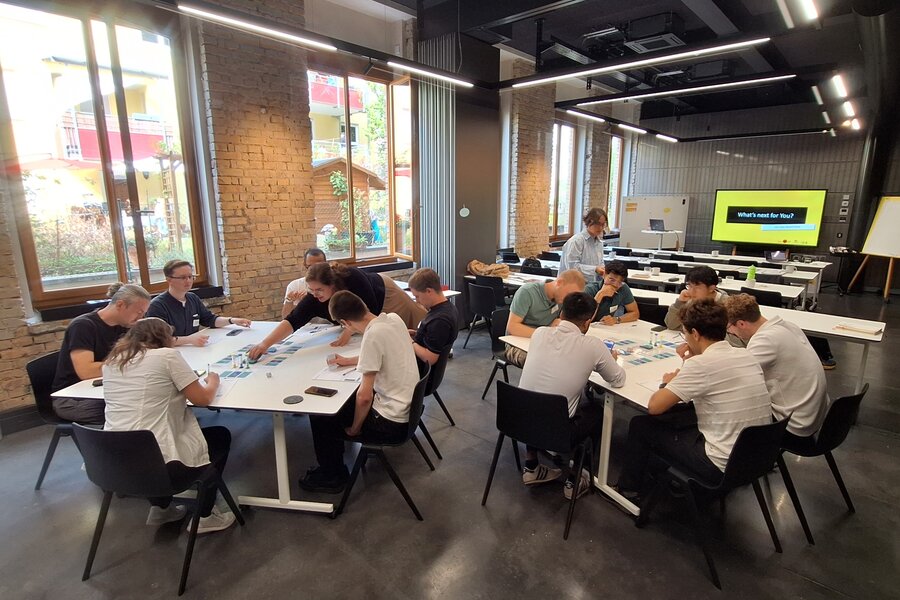
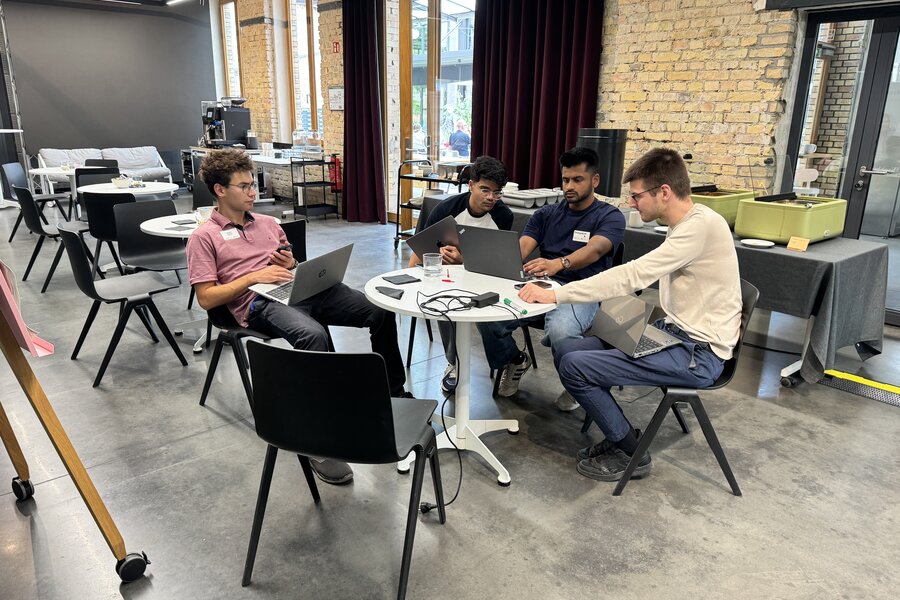
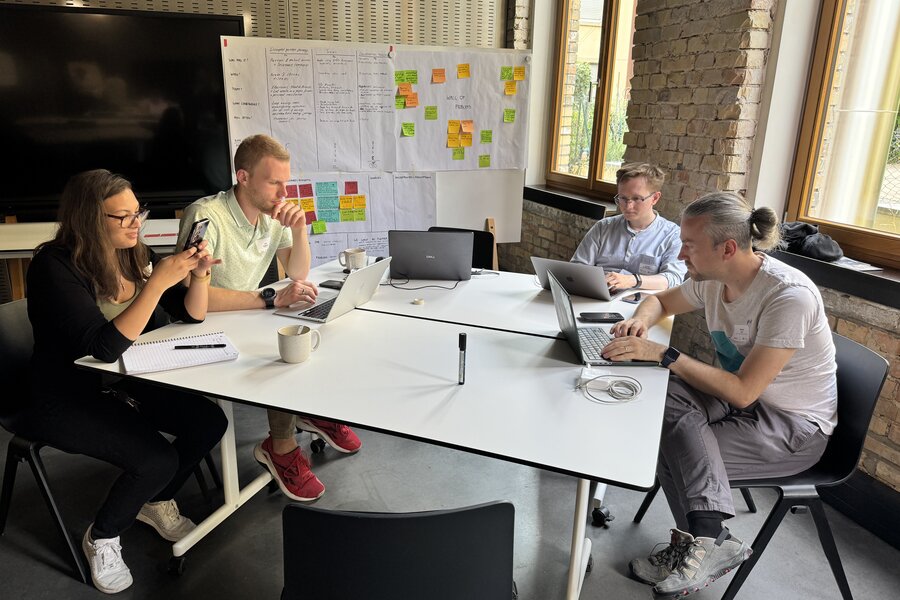
Day one focused on moving research into practice. Working in teams grouped by research focus, participants used ideation methods and personas to identify relevant problems, map out potential users and their needs, and carry out initial market research.
One message ran through the whole day: "Focus on the problem and talk to people." Founders who test their assumptions with potential users early build solutions that meet real needs. Starting from the technology alone risks missing them.
Learning from founders
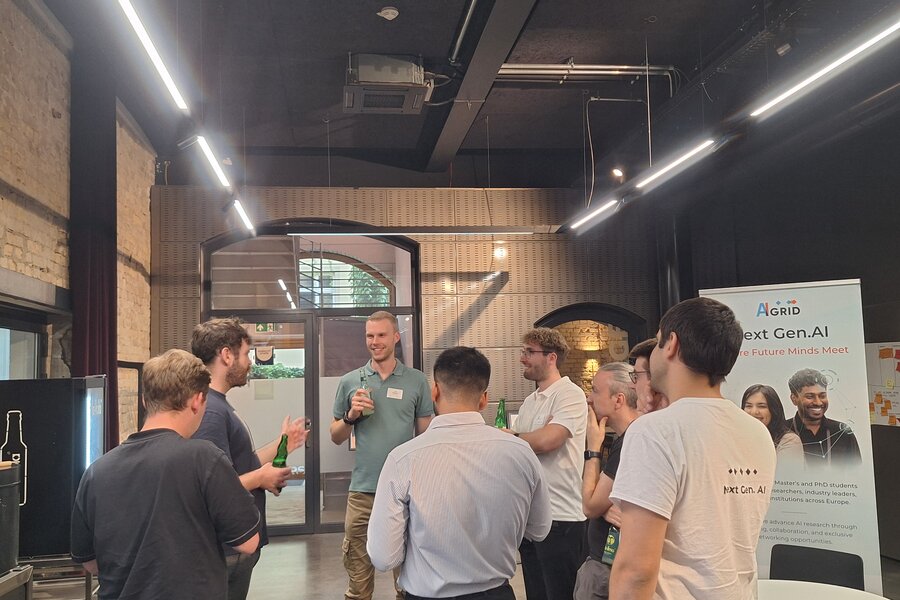
In the evening, a networking event connected participants with founders and experts from the NXTGN Startup Factory and KIT-Gründerschmiede communities. Johannes Zimmer, founder and CEO of lytris, spoke openly about his journey as a founder. He covered finding the right problem, building a go-to-market strategy, and winning over investors. He also talked about balancing the responsibilities of running a company with personal life.
From idea to pitch
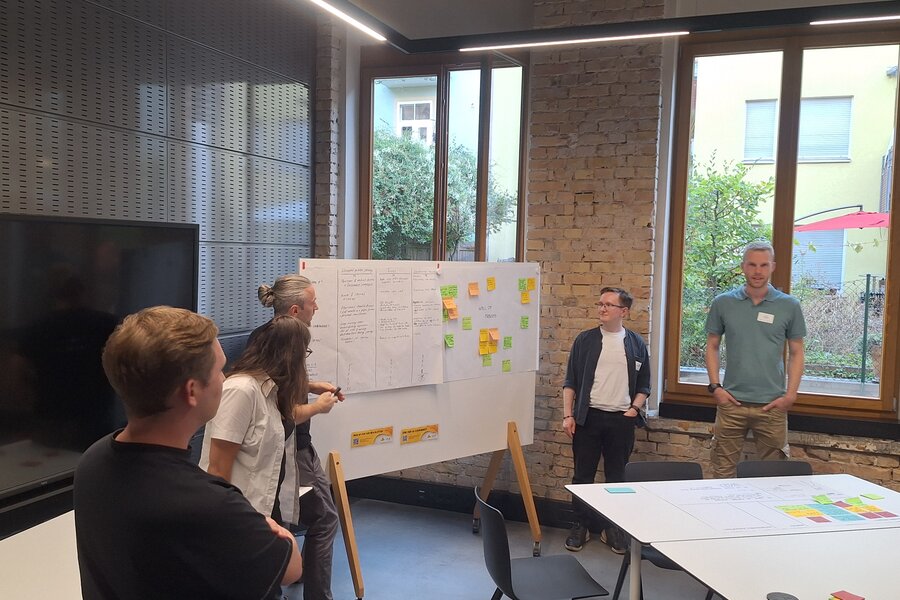
On day two, insights turned into concrete startup ideas. Teams worked on solution design, value propositions and business models, and explored how to design and validate a minimum viable product (MVP). Along the way, common assumptions were put to the test: What separates an invention from an innovation? Does a startup idea really have to be the first of its kind? Entrepreneurial potential often lies less in brand-new technology than in applying it convincingly.
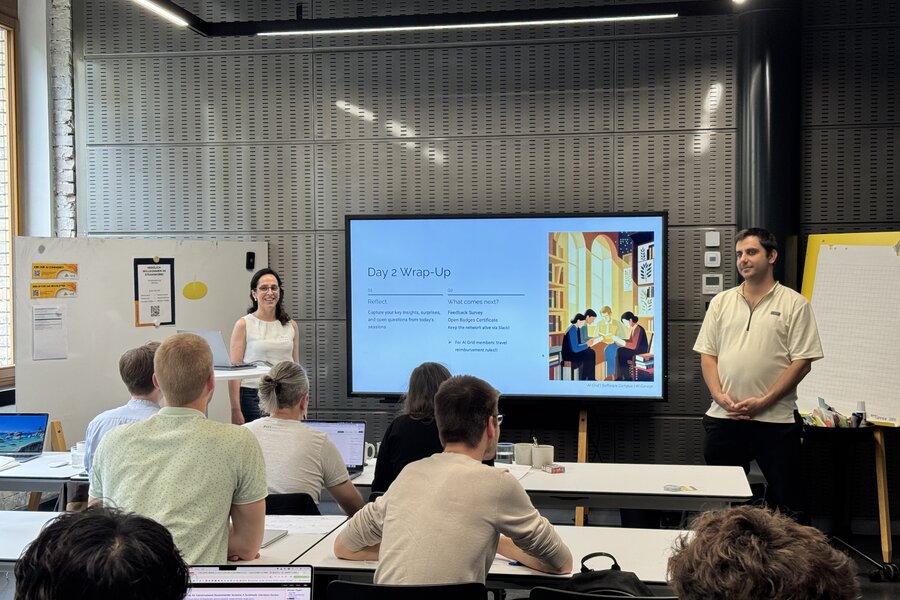
The workshop closed with a pitch session in which the teams presented their startup ideas and received feedback from a jury.
Voices from the workshop
For Georgii Kolokolnikov, AI Grid member, the workshop built a valuable bridge between academic research and entrepreneurship:
"What I found particularly valuable was that the workshop addressed how research and technological developments can be translated into a business model. The combination of short theoretical inputs and hands-on group work made the workshop very dynamic and varied."
He also highlighted the community aspect and the chance to develop a HealthTech idea together with like-minded peers.
One path among many
Not every researcher will found a startup, and that's fine. Knowing the path, though, opens up new perspectives on what your skills and research can achieve. Thank you to all participants, to Johannes Zimmer, and to our partners AI Grid and Software Campus for two inspiring days!
Researching AI and curious whether founding is for you? Check out our upcoming formats!
16. September 2026, Laura Kaltenmaier